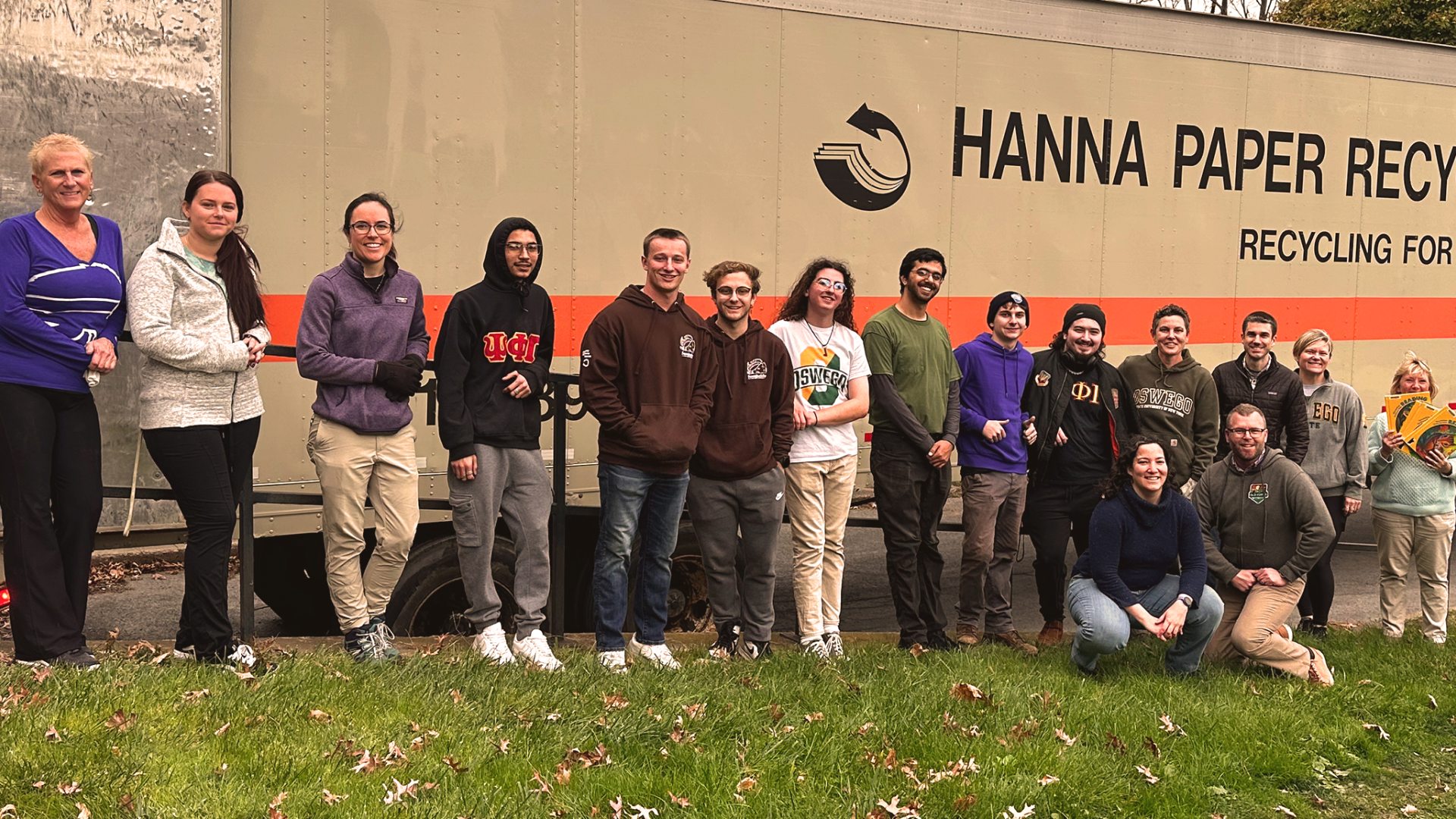
Students, Staff, and interns of the Office of Sustainability and Penfield Library at the large scale paper recycling event

Recycling and Disposal

at Suny Oswego

At SUNY Oswego, waste initiatives are central to campus operations and student life. The Department of Sustainability at SUNY Oswego is deeply committed to promoting waste reduction and recycling education on campus. Through various programs and initiatives, the department actively engages students, faculty, and staff in sustainable practices to help reduce the campus's environmental impact.

This page serves as a guide for students, faculty, and staff across campus for proper waste disposal.

Waste Reduction

Recycling and Disposal begins with reducing waste. Buying less products and using what is already available scales down the high demand for landfill and recycling facilities. Buy products that are durable, second-hand, or multi-use. Selling or gifting these items supports a circular economy and increases accessibility within the community.
 

Recycling Education

The Department of Sustainability focuses on educating the campus community about the importance of recycling, proper waste disposal, and reducing waste at the source. This includes providing resources on how to properly separate recyclables, the significance of single-stream recycling, and how individuals can make a difference in reducing their personal and collective carbon footprints.

Recycling Vs. Trash


Recyclable Items:

Make sure all items are clean and empty 

  • Aerosol cans
  • Bottles
  • Cereal boxes
  • Coffee cans
  • Detergent bottles
  • Glass jars
  • Letters and mail
  • Milk cartons
  • Pizza boxes
  • Shampoo and conditioner bottles
  • Soup cans
  • Spiral-bound notebooks
  • Tin foil
  • Paper
  • Cardboard

Trash Items:

  • Food items
  • Frozen food boxes
  • Hardcover books
  • Paper plates
  • Paper towels
  • Plastic wrap
  • Stuffed animals and toys
  • Styrofoam
  • Tissues
  • Shredded paper
  • Packing peanuts
  • Greasy food containers

Special Disposal:


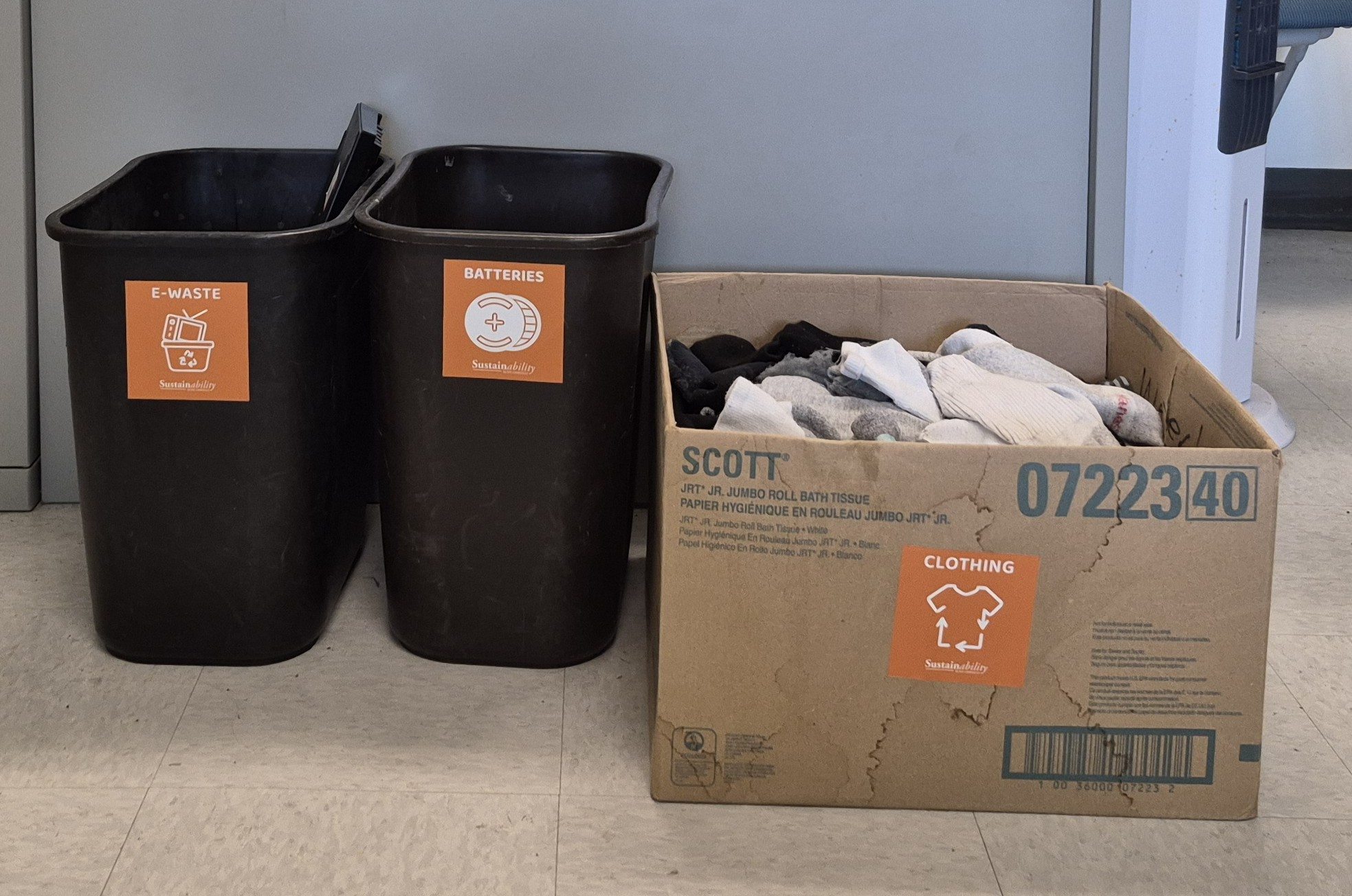
Disposal, recycling, and donation receptacles for batteries, e-waste and clothing

E-Waste:

Damaged electronics such as laptops, phones, charges, and other small electronics can be disposed of at residential recycling rooms or submit a disposal request with Environmental Health and Safety.

Batteries:

Batteries containing any of the following materials must be recycled in designated bins located at the front desk of various campus buildings. (This includes most consumer batteries)

  • Mercury
  • Silver Oxide
  • Lithium
  • Zinc
  • Nickel
  • Cadmium
  • Lead
  • Acid

Batteries labeled Alkaline are considered Non-Hazardous and can be disposed of in normal trash receptacles .

Any batteries you are unsure about can be sent via campus mail to the Environmental Health & Safety Office, at 110 Lee Hall.

Clothing & Textiles:

Gently used clothing, shoes, and textiles can be dropped off at the residence halls front desk, or in the donation bins at the end of each semester. Off campus students can contact the Office of Sustainability to have donations collected. Destroyed items can be disposed of in normal trash receptacles or with a recycling technician in recycling rooms.

Dry-Erase Markers and Other Writing Utensils:

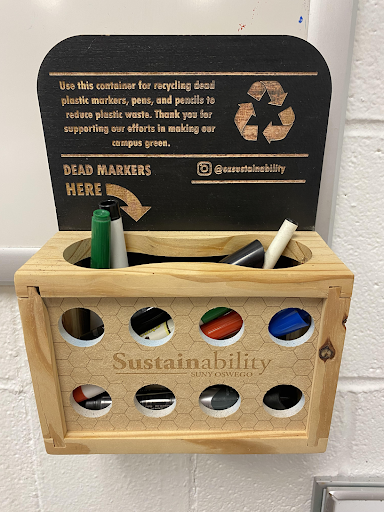
Box for collecting markers on classroom whiteboard

All writing utensils can be disposed of in labeled utensil disposal boxes in academic classrooms attached to white boards.

How to Recycle and Dispose of Waste on Campus:


Residence Halls (Dorms):

In Residence Halls (Cayuga, Funnelle, Hart, Johnson, Oneida, Onondaga, Riggs, Scales, Seneca, and Waterbury Halls), all residents are expected to bring all trash and recyclables to the recycling rooms for proper disposal. Residents are not advised to use the trash or recycling dumpsters located behind or near their residence hall.

Dorm Bins:

Each dorm room at SUNY Oswego is provided with two black trash bins and two blue recycling bins. Residents are encouraged to take their trash and recycling to their dorm hall Trash/Recycling room.

Recycling Technicians:

The Recycling Technician (RT) is a member of the Residence Life and Housing Student Operations Services Staff (SOS Staff). The role of the Recycling Technician is to oversee and enforce the Residence Hall Recycling Program in accordance with the Oswego County Recycling Program. 

Recycling Rooms:

In each residence hall, there are designated recycling/trash rooms that are equipped for proper waste disposal. 

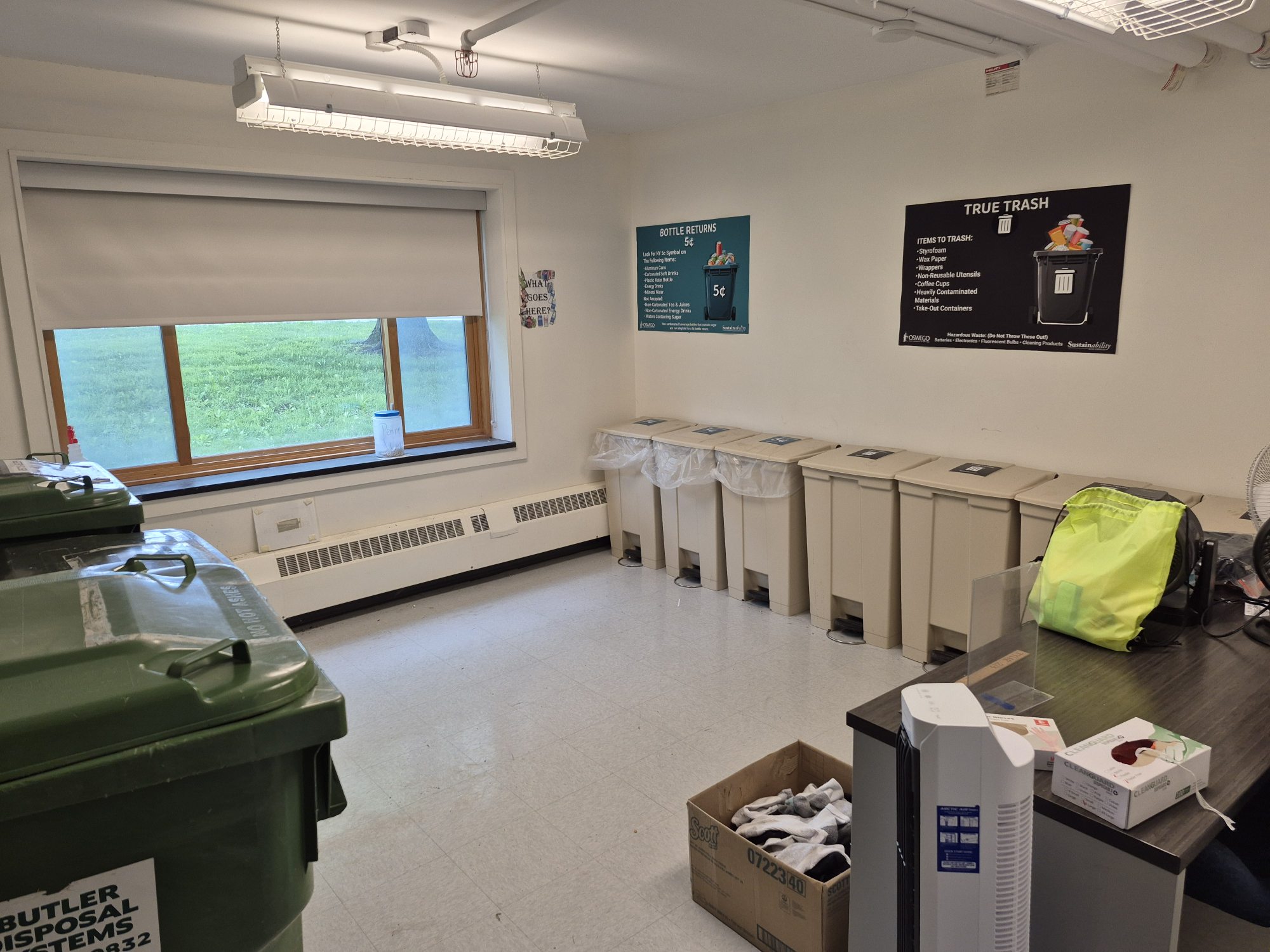
Recycling Room on campus with trash, recycling, and other bins placed neatly against the back wall

In these rooms, there are bins labeled:

  • Trash: Garbage should be bagged and placed in one of the designated trash receptacles.
  • Recycling: All recyclable materials should be placed unbagged into one of the designated recycling receptacles.
  • 5 cent Returnables: All 5 cent returnables should be bagged and placed into the designated 5 cent Returnable receptacles.
  • Batteries: All non-alkaline batteries should be disposed into the designated battery receptacle.
  • E-Waste: All E-Waste should placed into the E-Waste receptacle, or if it does not fit, beside the E-Waste receptacle.
  • Clothing: All clothing should placed into the clothing receptacle.

The Village:

In The Village apartments, the recycling process differs slightly from the residence halls, as there is no recycling technician present. Instead, it is the responsibility of each resident to properly manage their waste and recyclables.

Trash:

Residents are responsible for taking their trash out to the designated trash dumpsters located at the ends of parking lots R-80 and R-90.

Recycling:

Residents must take their recyclables out and ensure that they are placed in the correct recycling dumpsters located at the ends of parking lots R-80 and R-90..

Dumpsters:

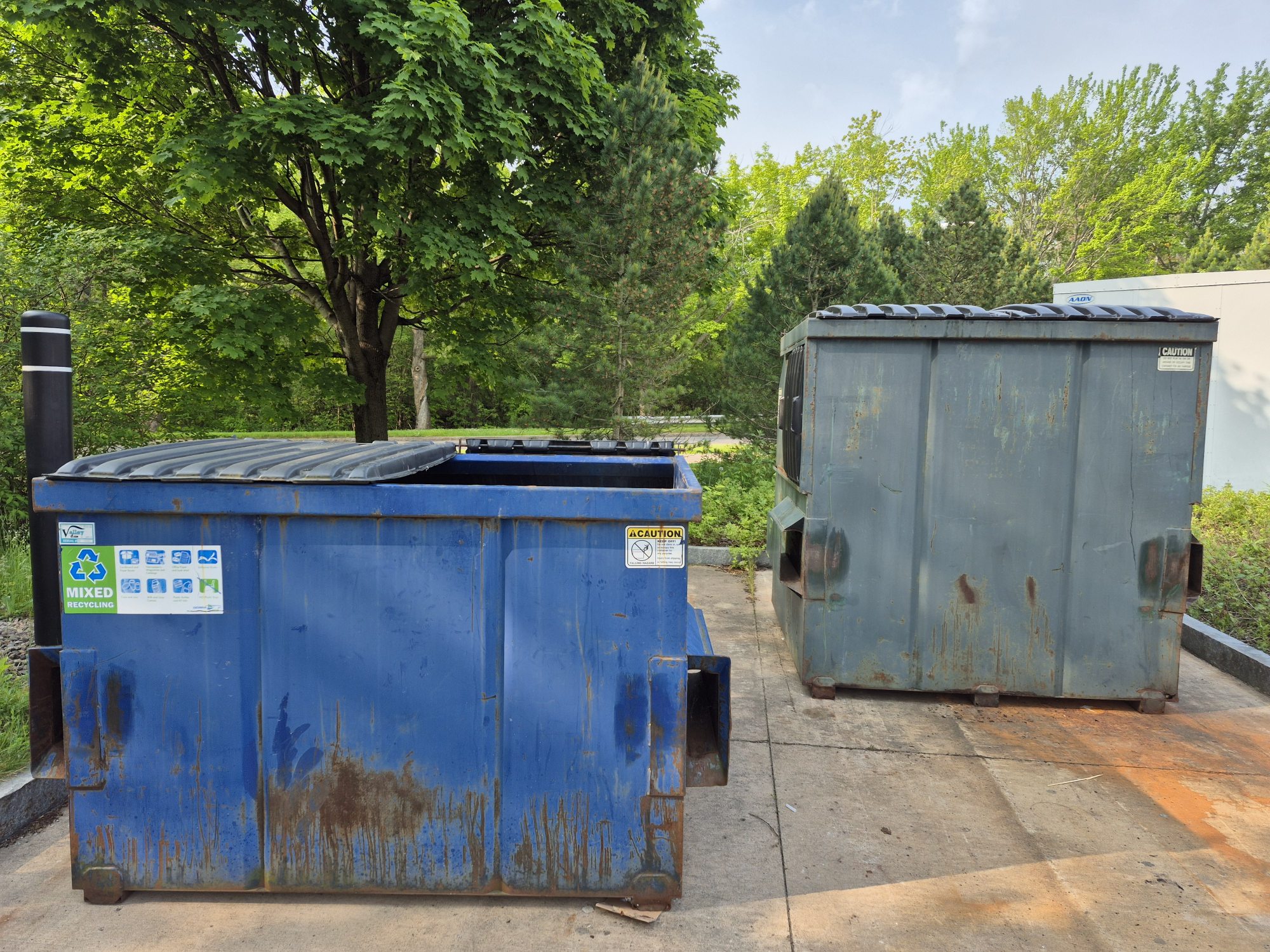
To make it easier for residents, the dumpsters are color-coded to distinguish between trash and recycling. The blue dumpsters are for recyclables, and the green dumpsters are for regular waste, helping to streamline the disposal process and reduce contamination in the recycling stream.

Blue recycling dumpster and Green Trash dumpster in village parking lot

Academic and Administrative Buildings:

In each academic and administrative building (Hewitt Hall, Laker Hall, Lakeside Dining Hall, Pathfinder Dining Hall, Cooper Dining Hall, Lanigan Hall, Mahar Hall, Marano Campus Center, Park Hall, Penfield Library, Poucher Hall, Rice Creek Field Station, Richard S. Shineman Center, Sheldon Hall, Swetman Gymnasium, Syracuse Center, Tyler Hall, Wilber Hall, Commissary and Maintenance Buildings, Culkin Hall, Lee Hall, Mary Walker Health Center, and Service Building 20) recycling and waste bins are placed in central locations.

Trash:

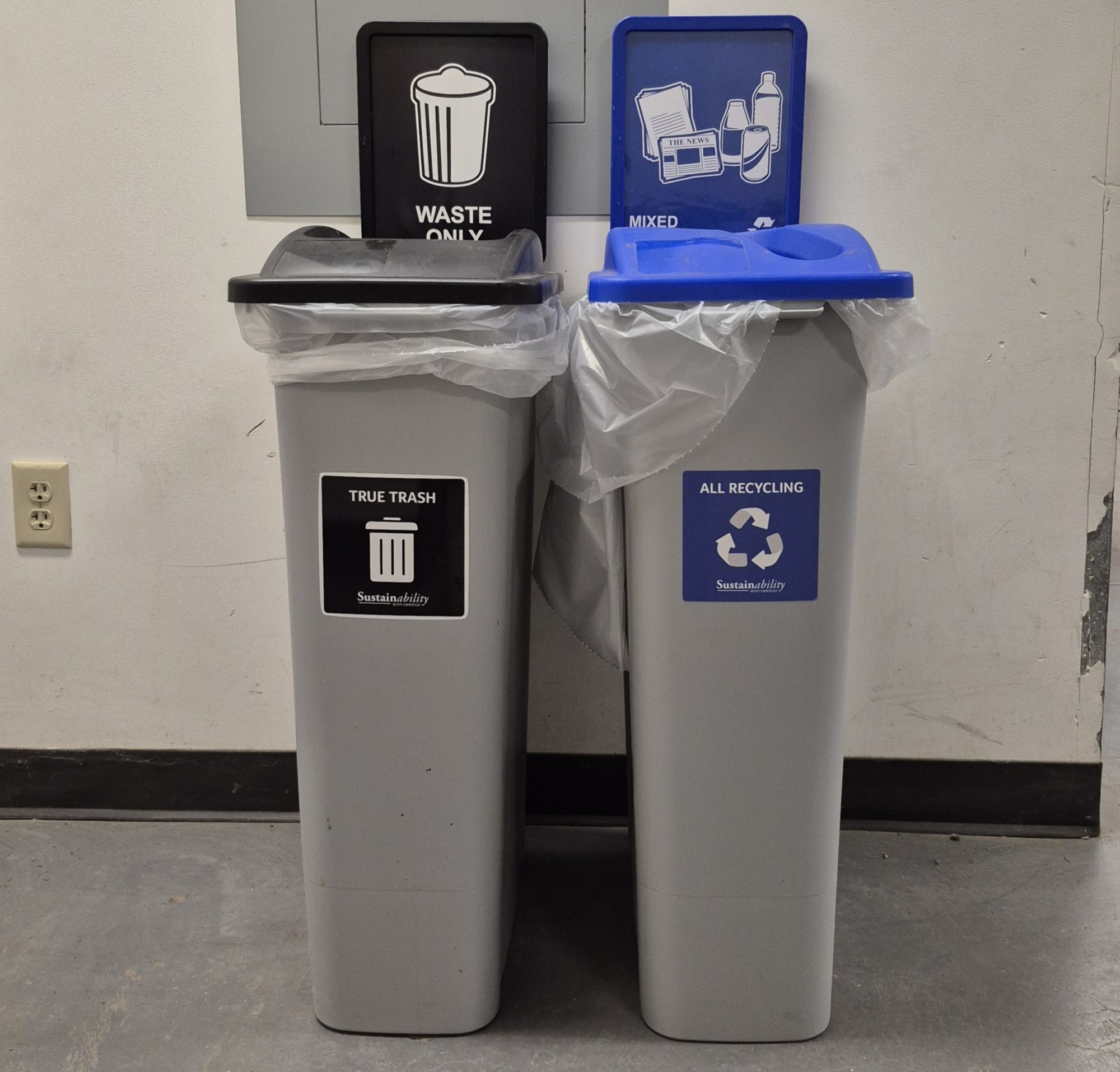
Trash bins have a black lid and are labeled with the black "True Trash" can logo.

Recycling:

Recycling bins have a blue lid and are labeled with the blue "All Recycling" logo.

Recycling Off-Campus


Off-Campus Students and Staff can learn more on the Oswego County website by clicking here.

Recycling FAQ


What is Single-Stream Recycling?

Single-Stream Recycling is a process that does not require any sorting of recyclable materials at the time of disposal. All items such as paper, cardboard, plastic, glass, and metal are sent to a recycling facility in the same container and sorted on site.

How do I reduce the waste I generate?

Follow the 3 R’s: Reduce, Reuse, Recycle—in that order of priority.

  • Reduce by identifying and eliminating sources of unnecessary waste.
  • Reuse by opting for products that can be used multiple times or repurposed.
  • Recycle only when reduction and reuse are not possible.

Prioritizing reduction limits the need for disposal and minimizes environmental impact at the source. Reusing eliminates waste that would be created with single-use objects. Recycling prevents waste from going into landfills and negatively impacting the environment.
 

How can I help address waste on campus?

Attend our Shining Waters program! More information can be found on the "Waste Initiatives Page".

Picking up waste whenever you see it anywhere on campus.

Can I compost on campus?

You can bring your food scraps and other typical compostable materials to the Permaculture Living Lab for composting.

Commercially compostable materials must be put in specific composting bins

Related Sustainability Initiatives:

Shining Waters logo

Shining Waters

This program emphasizes protecting and preserving Lake Ontario and its watershed, addressing water quality, pollution prevention, and ecosystem health. The initiative aligns with broader efforts to reduce plastic waste that often ends up in waterways.

Pleated woodpecker spreading its wings and looking skyward

SUNY Phase out of Single-Use Plastics

Emphasizing the responsibility of each campus to actively participate and drive awareness campaigns, This initiative stems from Policy 5201, and aligns with the adoption of Executive Order 22, which establishes clear procedures for SUNY campuses to follow for the phase out of single-use plastics.

Oz Thrift logo

Oz Thrift

Instead of disposing of gently used clothing and other items, donate them to Oz Thrift so they can find a new home. Every year, roughly 30,000 pounds of clothing, electronics, and other student donations are diverted from landfills.

25 Sheldon Ave
Oswego, NY 13126
315-312-6601
[email protected]

Instagram

@ozsustainability