
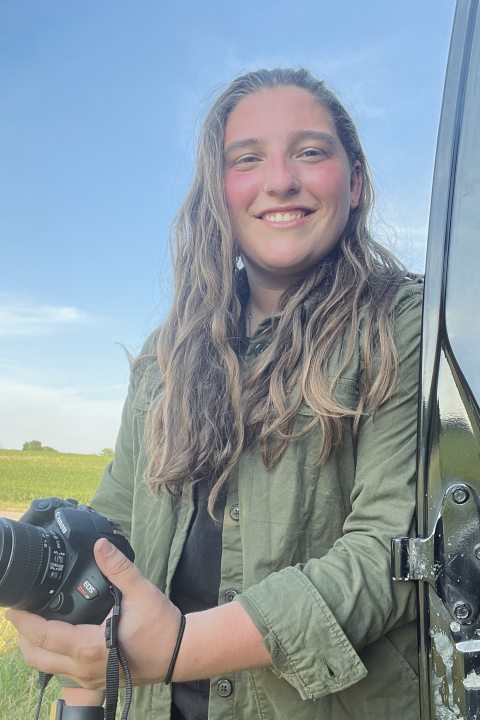
PhD student,
University of Chicago
What year did you graduate? What majors/minors did you have?
Answer: I graduated in 2019. I majored in English and Creative Writing, with a minor in Psychology.
Where did the English degree take you?
Answer: I am currently a graduate student at Loyola University Chicago working toward completing my PhD in English, concentrating on C19 American literature and poetry at the intersection of Digital Humanities and Textual Studies.
What from your English classes shapes how you engage in the world today?
Answer: As you can imagine, with the work I am currently doing, the answer is a lot. I took English and Creative Writing courses that complicated my thinking, challenged my understandings, and pushed my writing to accomplish stronger deliveries of my observations. This work taught me how to approach conversations of literature, history, identity, culture, and power (and their subcategories) with a high level of sensitivity and care for their profound importance in understanding our world and our texts.
What do you especially remember from the major?
Answer: Early in my undergraduate career I wove in and out of departments trying to find where I fit. I tripped into the English department and figured it would be a safe place to land. Needless to say, I never left. Similarly, I took creative writing courses for what were initially for purely creative interests but later they became intensely important to my understanding of our world and our texts.
In addition to coursework, the most formative experiences of my undergraduate career were when I got to work as a teaching assistant for Drs. Guerra and Jayawardane, two professors whose influences remain strong factors in my academic and professional pursuits today. It was during these experiences that I realized I enjoyed teaching and that I wasn’t done thinking about the discussions their courses initiated. I credit Dr. Guerra for introducing me to textual studies. It was there in his Genre, History, and Theory course that I became fascinated with the materiality of texts, with manuscript and print cultures and economies, and with the interplay of the material and the digital. I am now studying exactly this in graduate school.
Tell us about the challenges you face(d) after graduation (getting a job, etc). How did you navigate those challenges?
Answer: I am not sure that I had unique challenges after graduation. I wasn’t exactly sure what I wanted to do but I had a feeling that I wasn’t quite done with my education. I stuck out the pandemic in retail but always planned on applying to graduate school. If anything, I would say the most challenging part of the process was narrowing down my interests and deciding which types of programs to apply for. Drs. Guerra and Jayawardane deserve a lot of credit for guiding me through those decisions.
Final thought that feels important but I wasn't sure where to put it: As I am now teaching undergraduate courses of my own, I often think back to my time at Oswego. I think of the things that I needed, of the things that made me anxious or excited, and of how I felt as a student in the classroom who was just trying her best to figure things out. I find myself borrowing from the approaches I saw from my professors back then–ones that I found particularly formative–and I model my approaches and styles after those of the encouraging and invested educators that I owe for helping shape me as a thinker, writer, and now teacher.