Oswego's Kristen Eichhorn selected for national provost leadership academy
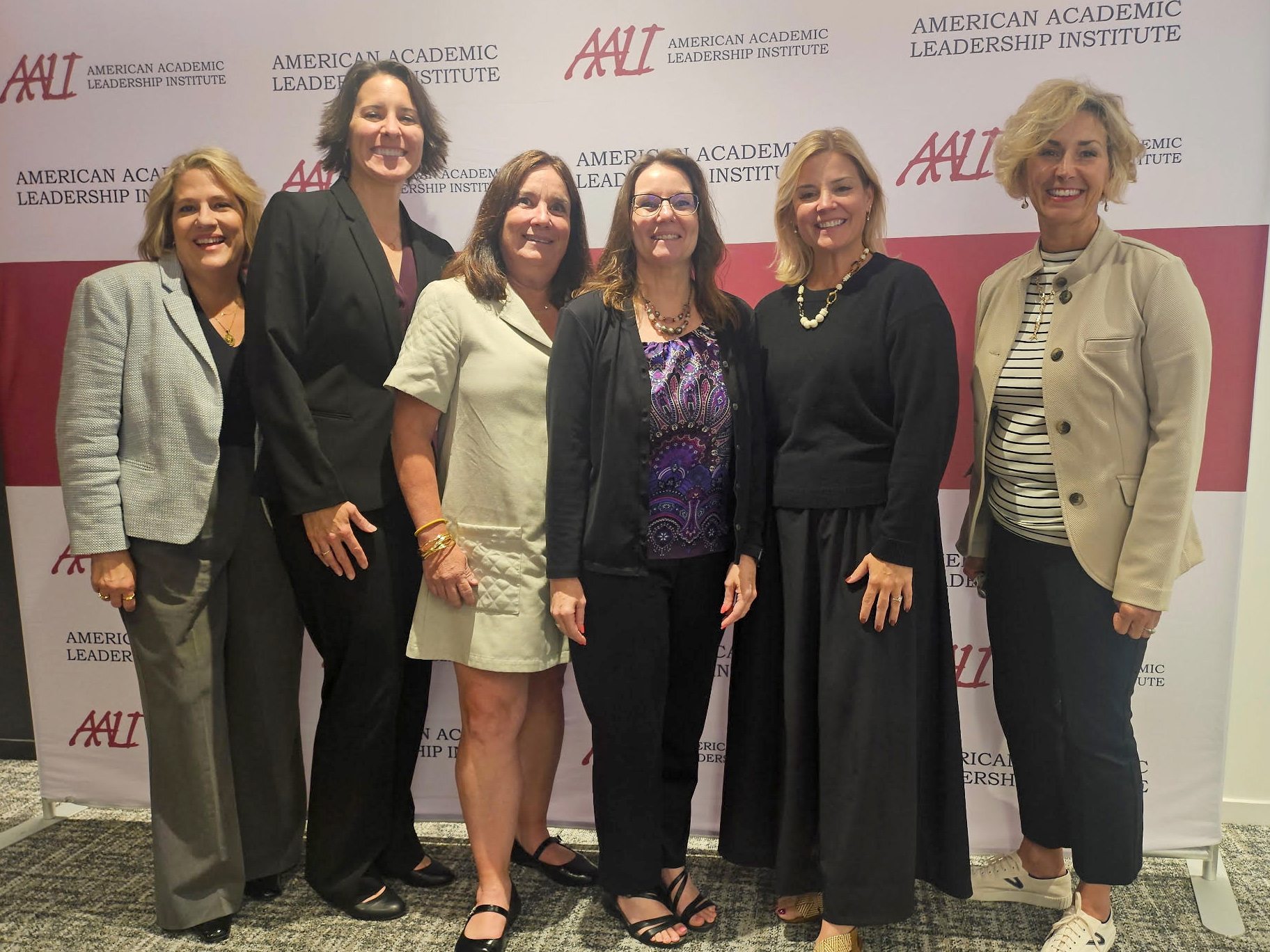
Kristen Eichhorn (second from right) with fellow top campus administrators taking part in the American Association of State Colleges and Universities’ Becoming a Provost Academy.
SUNY Oswego’s Kristen Eichhorn recently started a select program for top campus administrators in the American Association of State Colleges and Universities’ Becoming a Provost Academy (AASCU BAPA).
Eichhorn has had several months of on-the-job training serving as interim provost and vice president of academic affairs for SUNY Oswego. With Kate Pechenkina taking on that role as Oswego’s chief academic officer as of July 15, Eichhorn remains the university’s dean of graduate students.
She also served as interim dean of the College of Business and Entrepreneurship until Aug. 10 when Michele Thornton received appointment to interim dean.
She is one of 37 higher education leaders selected for the BAPA program designed to prepare emerging academic leaders for the complexities of the provost role.
Developed in partnership with the American Academic Leadership Institute, BAPA provides participants with targeted preparation in the key areas that define effective academic leadership. The program is geared toward experienced deans, associate and assistant provosts, and other academic administrators, and focuses on building the capacity required to succeed as a chief academic officer.
The 2026-27 cohort recently started the program with an initial gathering in Washington, D.C. “We had some really great conversations in D.C. with some of the AASCU team, meeting other outstanding leaders who will become key parts of our network,” Eichhorn said,
“The program includes topics such as how to present yourself as a provost, the value of higher education and the history of higher education,” Eichhorn said. “They also cover our connection to advocacy work, and the role a provost can play advocating for their institution and higher ed at the regional, state and federal level.”
Hot topics the academy will cover also include academic freedom and what it means, the role of artificial intelligence and adapting curriculum and operations to an ever-evolving landscape.
Providing access
Given AASCU’s mission that champions access in working with regional public universities like SUNY Oswego, providing opportunities is an ongoing emphasis, which Eichhorn enjoys.
“It’s wonderful to talk about what types of students we serve, and the flexibility for accessibility to different types of audiences,” Eichhorn said. “At Oswego, we have programs like the integrative professional studies degree incorporating prior learning and experience, among the new ways we serve students who are not traditional undergraduates. We have to be more open about getting people to the finish line.”
The program allows Eichhorn to connect with higher education leaders from around the country, where they can share successes, ideas and challenges. The program will involve Eichhorn finding a mentor and completing a project of interest to her and campus needs.
Previously, Eichhorn had the opportunity to become an American Council on Education fellow, a rigorous program designed to strengthen institutions and leadership in higher education by identifying and preparing faculty and staff for senior positions in college and university administration.
While that program unfolded around a decade ago, Eichhorn said those leaders remain in touch to this day.
“Similar to ACE, you have this talented cohort of people you can call on, get into a group chat and seek their expertise,” Eichhorn said. “People from that cohort are on that groupchat or connecting with each other still almost every day.”
Since its launch, BAPA has helped advance the careers of numerous academic leaders, with 225 alumni moving into provost positions and 39 progressing to college and university presidencies or chancellorships.
“It is encouraging to see such a strong group of academic leaders preparing to take on one of the most critical roles at an institution,” Terry Brown, AASCU’s vice president of academic innovation and transformation, said. “We’re excited to support this cohort as they continue to grow as leaders and expand their impact within their campus communities.”
AASCU is a Washington, D.C.-based higher education association that represents the sector of over 500 regional public colleges, universities and systems whose members share a learning- and teaching-centered culture, a historic commitment to serving today’s students, and a dedication to research and creativity that advances their regions’ economic progress and cultural development. The organization notes that these are institutions delivering America’s promise.